
Quality Revenue
You are an offline rockstar. I know because I can feel the heat coming off your power dialer--you make 700 calls into 47 time zones before lunch. One time you got Vladimir Putin on the phone to sell him reputation management. You would have closed him too if the KGB hadn't surrounded your house in 90 seconds.
Revenue is up year to year, your staff is so pumped up they are doing tequila shots for breakfast and you just set aside the money you'll need for a 2014 Cherry Red Camaro Z/28 LS7 V-8 with 500 HP.
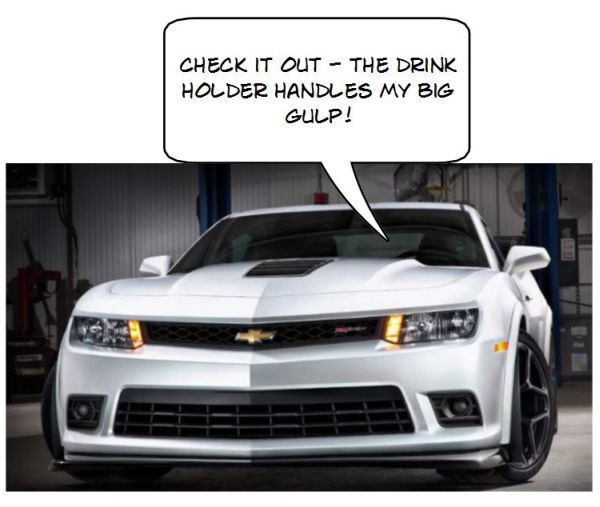
(I know, it's not red, but wowza.)
Cool beans. Revenue is great. But is it quality revenue?
There are three things that determine the quality of your revenue:
--Predictability- what percentage of your customers return year to year?
--Profitability- think Amazon makes most of their revenue from selling goods? Think again. Margins are critical. Shoot for gross profit margins of at least 70%. (Raise your prices, Cowboy Bob.)
--Diversity- spread out your revenue. No customer should represent more than 15% of revenue.
You gotta have all three to grow strong.
It's all here in Anthony K. Tjan's blog post at HBR:
What High-Quality Revenue Looks Like - Anthony Tjan - Harvard Business Review
As our man Anthony says, "Growth fueled by low-quality revenue can be exciting, but it eventually fizzles out."
Like a stale Big Gulp.
Do Anthony's theories make sense for your business?
Revenue is up year to year, your staff is so pumped up they are doing tequila shots for breakfast and you just set aside the money you'll need for a 2014 Cherry Red Camaro Z/28 LS7 V-8 with 500 HP.
(I know, it's not red, but wowza.)
Cool beans. Revenue is great. But is it quality revenue?
There are three things that determine the quality of your revenue:
--Predictability- what percentage of your customers return year to year?
--Profitability- think Amazon makes most of their revenue from selling goods? Think again. Margins are critical. Shoot for gross profit margins of at least 70%. (Raise your prices, Cowboy Bob.)
--Diversity- spread out your revenue. No customer should represent more than 15% of revenue.
You gotta have all three to grow strong.
It's all here in Anthony K. Tjan's blog post at HBR:
What High-Quality Revenue Looks Like - Anthony Tjan - Harvard Business Review
As our man Anthony says, "Growth fueled by low-quality revenue can be exciting, but it eventually fizzles out."
Like a stale Big Gulp.
Do Anthony's theories make sense for your business?
-
Aaron Doud -
Thanks
SignatureAaron Doud - Sales & Success{{ DiscussionBoard.errors[8086960].message }} -